

I’ve observed plenty of players chase progressive jackpots to identify the same mistakes over and over. The sight of a enormous pooled prize can bypass your logic. Even seasoned gamblers forget how these networks actually work. The design of a jackpot network isn’t just trivia—it determines your return on investment and your true odds of landing a life-changing sum. Here, I’ll discuss the structural errors I notice most often, from misreading contribution rates to neglecting withdrawal fine print. My goal is to guide you approach the reels with a focused head, not blind hope.
Mixing up Network Jackpots with Local Daily Drops
I notice a lot of strategic confusion when players conflate wide-area network progressives with localized daily jackpots. These two products are based on completely different math models, but casino homepages often present them as the same. A network jackpot collects contributions from thousands of players across many casinos, creating a prize that grows until someone hits a rare, life-changing sum. A daily drop jackpot, on the other hand, is programmed with a “must-pay-by” mechanic: the prize is guaranteed to trigger before a set time. I’ve seen players apply network-style patience to a daily drop game, not understanding the prize distribution is on a timer. The statistical urgency is completely different.
The mistake is viewing every big number on the screen as equally elusive. In a true network progressive, the odds are often like a lottery, and the prize can theoretically climb forever if the random trigger doesn’t hit. In a timed in-house jackpot, the probability of a payout rises as the deadline nears, assuming the prize hasn’t dropped yet. Players who don’t separate these two mechanisms often waste their session time. If you’re going after a network prize, there’s no “due” moment; the RNG has no memory. If you’re pursuing a daily drop, playing at the last minute might actually be a sharper statistical play, though you might have someone else hitting it seconds before you.
The seed funding sources also differ dramatically, which affects prize stability. Network jackpots usually reseed to a high base amount right after a win, supported by the game provider’s insurance or a reserve fund. Local daily jackpots often reinitialize to a much smaller fixed amount because they’re funded only by the house’s short-term liability budget. I’ve observed players rejoice over hitting a “Grand” prize on what they thought was a network game, only to receive a four-figure sum that was just the top tier of a localized promotional pool. To prevent that disappointment, I always advise going to the game’s info pages and checking for the term “wide area network” or “shared liquidity.” If it just says “must drop by” with a countdown clock, you’re not competing with a global player base, and your bankroll strategy should change.
Misunderstanding How Progressive Contribution Rates Operate
A basic mistake I notice all the time: players believe every cent they wager goes straight into the visible jackpot meter. It never does. The truth is more complicated and comes down to the contribution rate. When you activate a network-linked slot, a fixed percentage of your bet is reserved for the progressive pool. The rest covers the base game’s return-to-player percentage and the operator’s margin. I often find people chase a network jackpot without confirming that the game they’re playing might only contribute a fraction of a percent. The meter rises at a glacial pace compared to standalone progressives with higher allocation rates. You need to comprehend this split to choose whether the potential payout warrants the statistical cost of each spin.
Things get less clear when players don’t differentiate between the seed value and the organic growth of the prize. Every network jackpot has a minimum guaranteed starting amount, covered by the operator or game provider, that restarts after a win. Casual players often misinterpret this seed money for player-generated liquidity. If a jackpot returns to a clean one million and you see it at one million fifty thousand, only that fifty thousand resulted from actual player losses. The contribution rate determines how fast that fifty thousand built up. If the rate is very low, you’re basically engaging with a standard slot with a lottery ticket attached. Viewing it as a high-variance investment without carrying out the mental math on how much turnover it needs to move the needle by a single unit is a mistake.
Not all bets add equally. In many modern network setups, the contribution is proportional to your stake multiplier. But some systems offer a disproportionately higher contribution percentage only when you max-bet. I’ve reviewed games where betting the minimum basically locks you out of the primary network prize, set aside for players who trigger a specific bonus bet feature. If you gamble without reviewing the paytable or the game rules for the “Jackpot Contribution” clause, you might be supplying a prize pool you can’t even win. I always advise readers to take a moment and study the info screen before risking money. Lack of knowledge of the contribution mechanics is the fastest way to drain your bankroll with no realistic shot at the headline prize.
Overlooking Eligibility Requirements and Bet Thresholds
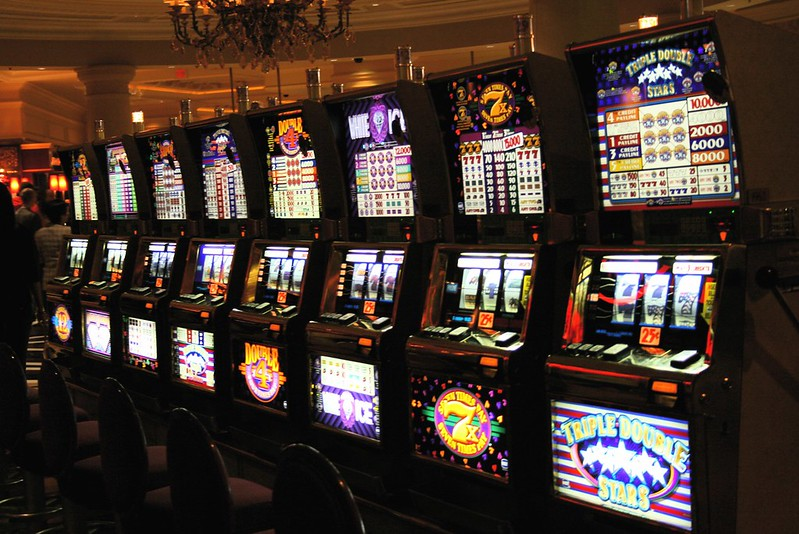
I regularly see a catastrophic oversight: players spin for hours thinking they’re in the running for the network grand prize, only to find out they never met the minimum bet threshold. Network jackpots aren’t democratic. A one-cent spin seldom gets the same treatment as a two-dollar spin. I’ve examined plenty of network setups where the Grand or Mega tier is firmly locked behind a qualifying bet. If you play below that threshold, the random number generator might still trigger the jackpot wheel, but the top segments will be greyed out, or worse, the trigger itself is mathematically impossible. This isn’t a hidden trick; it’s usually stated in the game rules. But the flashing lights make players skip right over these hard technical barriers.
Beyond bet size, there’s the often-overlooked issue of jurisdictional eligibility. I’ve seen cases where a jackpot network spans multiple countries, but licensing restrictions bar players from certain regions from winning the pooled prize, even if the game loads. This happens a lot with shared liquidity networks that cross regulatory borders. You might be playing a slot on a platform like Starda Casino, watching the same prize pool ticker as someone in a different jurisdiction. But if your local regulations prohibit cross-border pooling, a win could be voided or capped. I always recommend checking that your account’s jurisdiction is fully integrated into the network, not just a passive observer of the prize pool display.
The difference between mystery jackpots and symbol-driven jackpots also causes eligibility errors. A mystery jackpot can drop randomly on any spin, often regardless of the base game outcome, as long as you meet the bet qualification. A symbol-driven network jackpot needs a specific combination of symbols on a specific active payline. I’ve seen players raise their bet size to qualify for the network prize, then cut the number of active paylines to save money. That inadvertently makes the winning combination impossible to land. This half-measure wastes the increased stake. To avoid it, make sure both the coin value and the reel coverage match the game’s triggering mechanism. Eligibility is binary, not a sliding scale.
Overlooking the Influence of Money and Exchange on Winnings
I rarely see players consider the backend conversion processes when a jackpot network displays a prize in a currency other than their account. That’s a big blind spot. A network jackpot might be quoted in Euros, but if you’re playing with a Canadian dollar or crypto balance, the final amount you get hinges on the operator’s internal exchange rate and when the conversion occurs. I’ve examined cases where a player hit a network prize shown as a static number, only to receive a lot less in their local currency because a delayed settlement caught an unfavorable exchange rate swing. The displayed ticker is a marketing number, not a guaranteed deposit figure in your globalnews.ca wallet.
Cryptocurrency volatility adds another layer of complexity that most players aren’t ready for. If you’re on a crypto-friendly platform and the jackpot network is natively in fiat, the operator has to bridge that gap instantly. The spread on that conversion can eat a noticeable chunk out of a six- or seven-figure win. Conversely, if the network runs on a crypto stablecoin, the prize may be shown as a fiat equivalent that changes every second. Fixating on the fiat approximation without knowing whether the prize is a fixed coin amount or a fixed fiat amount is a blunder. A “1 million dollars” jackpot paid in Bitcoin could vary by thousands of dollars depending on whether it’s pegged to the dollar value at the moment the spin stopped or when the funds clear.
I also want to underscore the practical error of ignoring payment processing limits with network wins. A pooled jackpot can yield a sum far above standard deposit and withdrawal ceilings. If an operator promotes a two-million network prize but has an unstated monthly withdrawal cap of fifty thousand, you’re looking at a multi-year payout structure. Reputable platforms like Starda Casino usually keep liquidity pools to handle large network payouts, but you still need to read the specific terms on installment payments for progressive wins before you play. I always review the banking policy to see if network jackpots are listed as an exception to standard limits. A win is only as valuable as your ability to obtain the funds in a reasonable timeframe.

FAQ
What exactly defines a casino jackpot network differentiated from a regular progressive?
A jackpot network gathers stakes from multiple machines, typically across different online casinos, into one shared prize pool. A regular standalone progressive merely gathers funds from the specific machine you are using that single site. This cross-operator pooling allows network jackpots reach millions fast, because thousands of players contribute to the same pool at once. The key giveaway is usually a branded name like “Mega Moolah” or “WowPot” that appears identically across different platforms, indicating shared liquidity.
Can I win a network jackpot while playing with a bonus balance?
That depends entirely on the specific terms of the promotion you claimed. I frequently encounter bonus terms that explicitly exclude progressive jackpot play from wagering requirements, so spins on these games are not applied to clearing the bonus. In other cases, the jackpot win itself may be restricted if you hit it while a bonus is active, or the win may cancel the bonus funds completely. You must read the “Game Weighting” and “Max Win” clauses of the specific bonus contract before spinning a network slot with an active bonus.
What makes some network jackpots tend to land at similar amounts every time?
That’s typically a sign of a “must-drop-by” mechanic integrated into the network’s programming, not a entirely random trigger. The game provider determines an upper limit, and the RNG is configured to make sure the prize triggers before that ceiling is reached. In statistical terms, this creates a cluster of wins within a specific range, because the probability density grows near the upper boundary. A truly random progressive has no upper limit and can in theory run much higher, so the distribution of win amounts is much broader and less deterministic.
Is it safer to play network jackpots on a mobile device or a desktop?
From a technical integrity standpoint, there’s no difference in safety or probability. The outcome is resolved by a central server, not your local device. But I regard mobile play slightly riskier for purely practical reasons: a sudden loss of internet or an incoming call can’t affect a server-side result, but it can cause the game client to lose sync, making it difficult to capture a screenshot of a win. For high-stakes network play, a steady, hardwired connection lessens the anxiety of a client-side crash during a bonus trigger, even though the math is identical.
How can I tell if a casino genuinely offers the jackpot network it advertises?
Examine the game’s data page or lobby directly. A authentic host will have the jackpot ticker integrated into the live game client, updating in real time as you play, not just a stationary banner on the homepage. If you start the slot and the progressive meter aligns with the listed network total and updates with every spin, it’s live. If the ticker shows up on the promotional page and the in-game jackpot indicates a separate, smaller local amount, the casino is most likely just promoting the network without actually participating in the shared liquidity pool.
Not Verify the Protection and Reliability of the Network
When I review jackpot infrastructure, I notice that players rarely ask the critical question: who validates that the network prize is authentic and winnable? A pooled jackpot on a website is merely a number on a screen without it’s backed by a provably fair or independently audited system. I search for specific integrity indicators, like a real-time hash published by the game provider or a certification from a testing lab such as iTech Labs or GLI. If an operator merely displays a ticker without linking to a verification tool, you’re placing blind trust in a system that could theoretically be manipulated. The most common mistake is assuming that because a brand looks legitimate, the third-party network jackpot feed is automatically accurate.
The technical architecture of the jackpot controller counts more than most players realize. A solid network uses a dedicated jackpot server that acts as the single source of truth, aggregating contributions from all participating casinos in real time. A weaker setup might depend on the casino’s local server to report contributions, which introduces latency or, in worst-case scenarios, a disconnect between the displayed amount and the actual reserve. I’ve investigated complaints where a player triggered a jackpot, but the win was disputed because the local client showed a different value than the central server. To reduce this risk, I favor platforms where the game provider, not just the casino, hosts the jackpot logic. That ensures a win signal is recognized independently of the operator’s internal systems.
I also pay close attention to the segregation of jackpot funds. In regulated environments, operators are often required to hold progressive liabilities in a separate, protected account, so the money is there when a player wins. In less transparent jurisdictions, the “jackpot” might just be a marketing liability on the operator’s balance sheet. If a casino runs into liquidity issues, a network win could be delayed or disputed. I always search for language in the terms and conditions that confirms the prize is guaranteed by the game provider’s network, not just the individual casino. The difference between a provider-funded network and a house-funded aggregate is the difference between a secure windfall and a potential collections battle.
Handling poorly the Post-Win Process and Tax Duties
The moment a network jackpot hits, a clock ticks on a series of administrative steps that most winners are totally unprepared for. I’ve seen the euphoria of a big win turn sour fast because the player violated a verification protocol or didn’t comprehend the documentation needed to release the funds. The first mistake: attempting to withdraw the entire balance in one lump sum before completing the Know Your Customer escalation. A network jackpot win almost always triggers an enhanced due diligence check. You’ll need more than a standard ID—proof of source of funds, a selfie with the ID, sometimes a video call. If you play without having these documents ready, you’re adding weeks of unnecessary stress to the payout timeline.
The structural error I want to highlight is failing to separate the principal bet from the jackpot drop in your mental accounting https://stardacasino2.org/. When you win a network prize, the funds are usually credited to your main wallet, mixing with your existing balance. I strongly advise taking a screenshot of the win screen and immediately setting a withdrawal for the bulk of the prize, leaving only a small, pre-set amount for continued play. The temptation to “play on the house’s money” is how huge network wins get recycled back into the casino within days. I’ve analyzed post-win behavior patterns, and the data shows that players who don’t physically segregate the jackpot funds within the first hour are much more likely to lose a big chunk back to the very network that paid them.
Finally, I have to address the often-ignored reality of cross-border tax liability. A network jackpot might be paid out by a provider in one country, through a casino licensed in another, to a player living in a third. The tax implications are a triangle of complexity. I’m not a tax professional, but I’ve seen enough cases to know that assuming the win is “tax-free” because the casino doesn’t withhold anything is a dangerous mistake. In many jurisdictions, it’s your responsibility to declare and pay the appropriate gambling duties or income tax. Not setting aside a portion of a network jackpot for a potential tax bill can lead to a financial crisis a year later. I always recommend consulting a specialist right after a major network hit, before you spend a single dollar of the cleared funds.
Overlooking the Variance and Money Drain of Qualification Bets
The large minimum bet needed to get access for the top network jackpot tier introduces a volatility spike that many players greatly underestimate. A slot that’s normally low-volatility at minimum stakes can turn into a severe balance destroyer when you’re forced to spin at five or ten dollars to enable the jackpot contribution. I’ve performed simulations and examined session logs where players burn through a monthly budget in under an hour. They’re investing a premium for the jackpot side bet without landing base game features often enough to maintain the play. The network prize acts as a massive variance amplifier. Without a bankroll that can withstand hundreds of dead spins, you’re essentially buying a lottery ticket with a very high immediate cost.
I must emphasize the psychological trap of the near miss in network jackpot games. Game designers often incorporate a jackpot bonus wheel or a picking game where you reveal lower-tier prizes before failing to get the grand one. This visual feedback loop fools your brain into thinking you were close, which motivates you to keep betting at the qualifying level. Objectively, the RNG decided the outcome the instant you clicked spin. The animation is merely theater. I notice players double down after a near miss, certain their “turn” is coming. In reality, the odds revert identically to the previous spin. That’s a quick track to draining your deposit. I suggest setting a strict loss limit that adjusts for the inflated bet size before you even start the game.
Another often-ignored aspect is the opportunity cost of locking up funds in a network chase. The money you place into high-stakes qualifying spins on a network slot can’t be employed on high-RTP table games or lower-variance video poker, where your expected value per hour is often higher. I’ve estimated scenarios where a player’s expected loss per hour on a network jackpot slot, after accounting for the tiny probability of the grand prize, significantly exceeds the theoretical loss on a blackjack table with perfect basic strategy. The utility of a massive win is undeniably high, but it’s a error to overvalue the jackpot’s remote upside against the certain, steady drain of the qualifying bets. A logical approach considers the network chase as a modest, fixed-percentage satellite of your overall session, not the main event.